Fires on the headlands
Communities used elevated signal fires and daylight markers to warn vessels from dangerous approaches.
Source note: Context note: early coastal signals varied by settlement and surviving records.
History Reference
Scan each era for structural changes, keeper practice, and coastal conditions before moving into the story and tower records.
Before 1800
Communities used elevated signal fires and daylight markers to warn vessels from dangerous approaches.
Source note: Context note: early coastal signals varied by settlement and surviving records.
Early 1800s
Purpose-built towers brought fixed lights and regular watches to exposed northern passages.
Source note: Archive note: construction dates should be read with local records where available.
Mid 1800s
Improved optics concentrated lamplight, extending its reach and giving stations distinct signatures.
Source note: Technology note: lens adoption differed from station to station.
Late 1800s
Homes, supply routines, logbooks, and night watches made isolated stations small working communities.
Source note: Social-history note: duties were often shared beyond the named keeper.
1900–1950
Sound signals, stronger lamps, and changing navigation systems expanded the work of coastal stations.
Source note: Operational note: equipment and staffing changed repeatedly during this period.
After 1950
As automated systems reduced resident crews, local groups began protecting towers, records, and memories.
Source note: Preservation note: surviving towers have varied ownership and access.
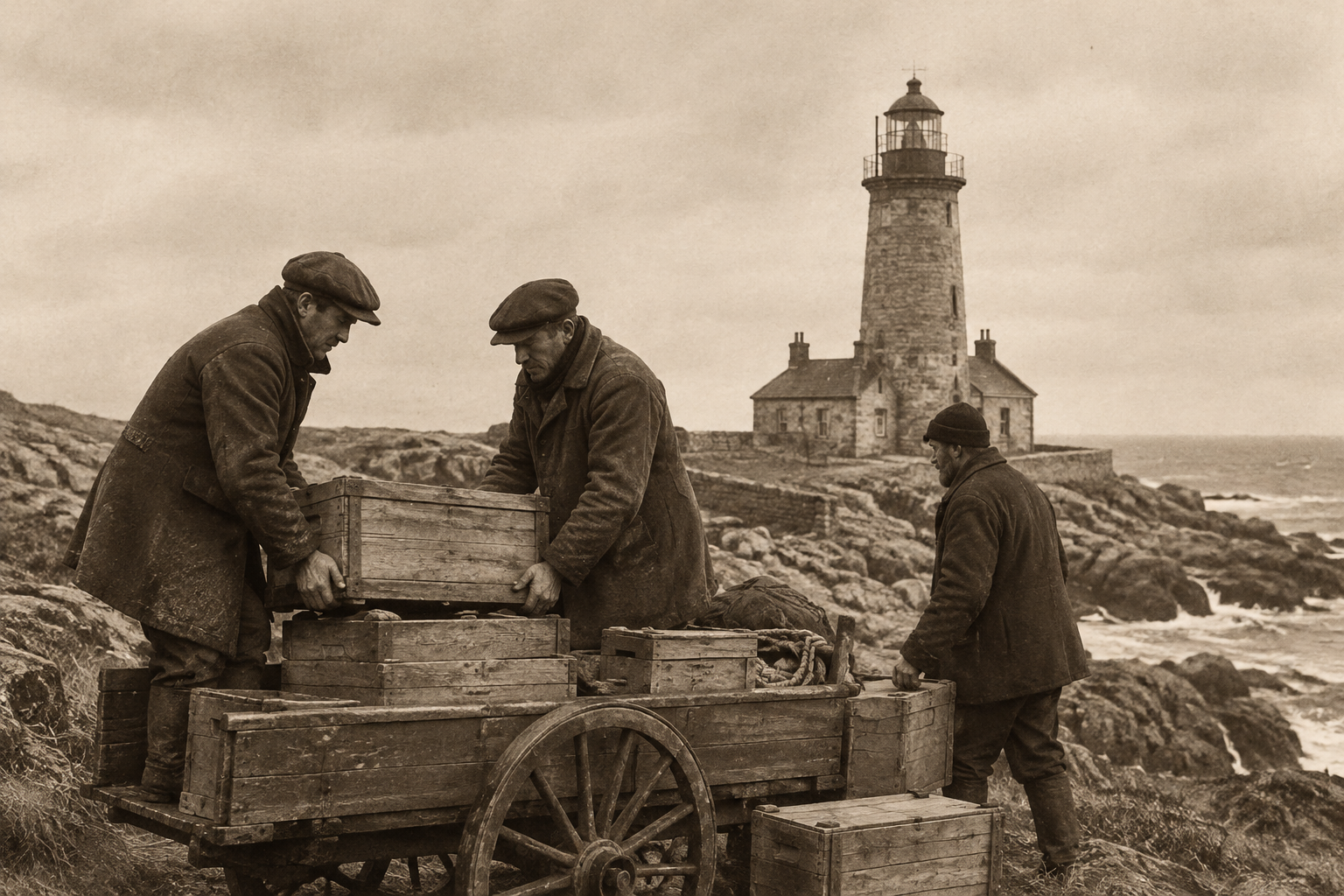
Support image: keepers and seasonal laborers staging supply crates below an isolated northern tower.
Illustrative source note: composite reference frame prepared for contextual orientation, not a dated primary record.